Sleep advice · · 7 min read
Weighted blankets: benefits, how they work and how people use them
What is a weighted blanket for? Definition, microbeads and stitched pockets, the deep pressure principle, common uses and tips for getting started.

A weighted blanket, also known as a heavy blanket, weighted throw or gravity blanket, is a blanket filled with small beads spread across stitched pockets. Its weight, chosen at around 10% of body weight, rests evenly on the body and creates a gentle, enveloping pressure. It first appeared in the United States before becoming commonplace in Scandinavia, and today it has found its way into bedrooms and living rooms across Europe and beyond. In this guide, we explain simply what a weighted blanket is for, how it is made, what people look for in one and how to get started, without overblown promises.
What is a weighted blanket?
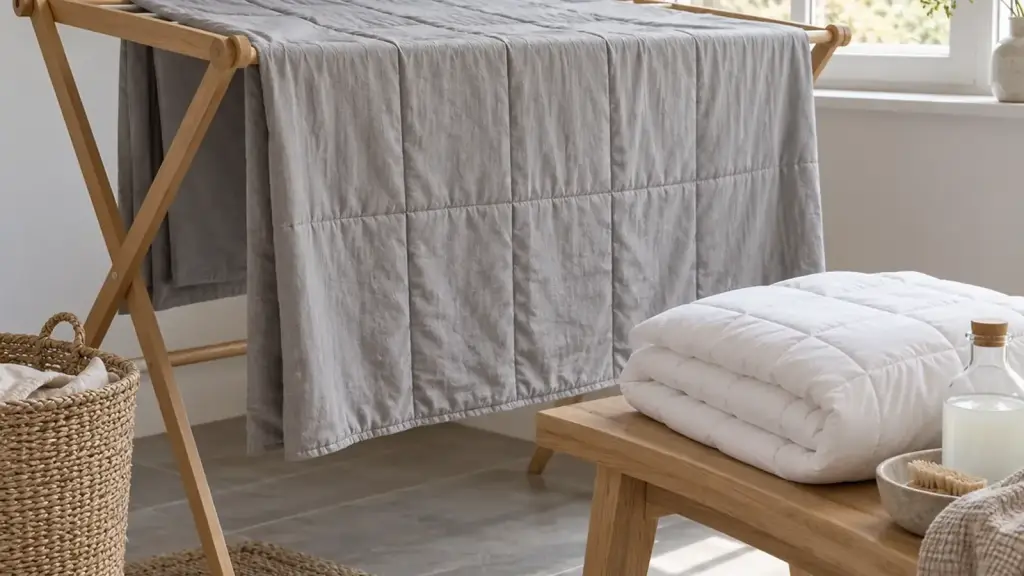
A weighted blanket is a blanket that is heavier than an ordinary one, with its weight coming from a deliberately added filling. That filling is not loose: it is enclosed in a grid of small stitched squares, which spreads the mass over the whole surface. The result looks like a regular blanket, just a little denser, that follows the contours of your body instead of simply covering it.
The principle is deliberately simple. There is no motor, no electronics and no settings: just a textile, a filling and a construction designed to keep the weight evenly spread, night after night.
Heavy blanket, weighted throw, gravity blanket: different words for the same thing
These terms all refer to the same type of product. People tend to say weighted throw for use in the living room, on the sofa or while reading, and heavy blanket or gravity blanket in a more general sense. The weighted duvet (or weighted comforter) is a special case: it adds an insulating layer that provides the warmth of a duvet. We explain these differences in our article weighted duvet or weighted blanket.
How does a weighted blanket work?
Three elements determine the quality of a weighted blanket: the filling, the distribution of the weight and the way the fabric is put together.
The filling: glass microbeads or steel beads
At Tyngda, most of our blankets are filled with glass microbeads. Very small and smooth, they provide a lot of mass for a small volume, which makes it possible to create a heavy blanket that is not thick. They remain discreet to the touch through the fabric.
Our Premium model is the exception: it contains stainless steel beads secured inside the insert, which does not shift inside its zip cover. Both solutions have the same goal: a stable, even weight.
The pockets: evenly distributed weight
The filling is spread across pockets stitched in a grid. Each small square holds a similar quantity of beads. This way, the weight does not slide toward your feet or the sides when you turn over, and the pressure stays even from your shoulders to your legs. This is what sets a real weighted blanket apart from a simple thick throw.
With a cover or all-in-one
There are two main types of construction:
- Weighted insert + removable cover: the insert holds the weight, while the cover provides the feel (cotton, velvet) and is easier to wash. You can change the cover with the seasons.
- All-in-one: the filling is stitched directly into the outer fabric, with no cover. It is simpler day to day, with no zip or ties.
Neither is better in absolute terms: it all depends on your preferences in terms of feel, warmth and care.
Deep pressure stimulation: the principle people look for
Weighted blankets are often associated with the idea of deep pressure stimulation. The idea is easy to understand: firm, even pressure spread over a large area of the body, comparable to the feeling of being wrapped up snugly or held in a hug. Many people describe this sensation as reassuring and conducive to calm.
It is important to be precise. We present deep pressure stimulation as a principle people look for and a sensation, not as a guaranteed result. Some people feel comfortable under it straight away, others need a few evenings to get used to it, and others end up preferring a lighter blanket. Experiences vary from person to person, and that is perfectly normal.
What is a weighted blanket for? The most common uses
People adopt a weighted blanket for many different reasons. Here are the uses we come across most often:
- A soothing bedtime ritual: settling under a gentle weight, switching off screens, reading a few pages. The blanket becomes a cue that marks the end of the day.
- The cocooning feel: many people look for that feeling of being wrapped up, a bit like under a thick winter duvet, but with a more noticeable pressure.
- Moments of relaxation: on the sofa watching a film, during a nap or while reading, as a weighted throw.
- Sensory needs: highly sensitive people, as well as families affected by ADHD or autism, turn to weighted blankets for their consistent sensory input. We have gathered suitable models in our sensory weighted blanket selection.
- Evening stress: some people use it when falling asleep feels difficult or when they struggle to switch off after a busy day.
In every case, the benefits of a weighted blanket are a matter of comfort and personal experience. It can contribute to a relaxing atmosphere, but nobody can promise the same effect for everyone.
What a weighted blanket is not
To choose well, it also helps to know what a weighted blanket does not do:
- It does not replace healthcare. If your sleep difficulties or stress persist, talk to a healthcare professional.
- It is not intended for babies or for children under 3 years old or under 15 kg.
- It is not a blanket for the whole bed: it covers one person’s body, not the entire mattress.
- It does not require any set duration: you can use it for an hour, an evening or all night, depending on your comfort.
Some people should also ask for advice before using one. We list them in our article weighted blankets: risks and precautions.
Comfort product, not a medical device. If in doubt, or for a child, ask a healthcare professional for advice.
How to get started with a weighted blanket
Choose the right weight
The reference rule is simple: a weight of around 10% of your body weight. A person weighing 60 to 69 kg would choose a 6 kg blanket, and a person weighing 70 to 79 kg a 7 kg blanket. If you are torn between two weights, if it is your first weighted blanket or if you are sensitive to pressure, go for the lighter one. Our weighted blanket weight guide sets out the complete chart and the models available in each weight.
Choose the right size
A weighted blanket should cover your body without hanging over the sides of the bed, otherwise the weight pulls toward the floor. The 135 × 200 cm size suits most adults; the 150 × 220 cm is for taller people or those who like to be well covered. Even on a 160 cm bed, a 135 × 200 cm blanket is right for one person.
Get used to it gradually
Start with short periods: on the sofa at the end of the day, or in bed while you read. Then, if you like the feeling, keep it on for longer. You must always be able to lift it and remove it easily on your own. If it feels too heavy or too warm, take it off straight away.
Think about the season
Weight and warmth are two different things. For warm nights, a cotton or linen model without a thick cover stays more breathable. For winter, a model with a velvet cover or a weighted duvet provides more warmth. You can compare all our models in our weighted blankets collection.
Finally, take the time to try it: you have a 30-night trial, and if the weight you chose is not right for you, we will arrange an exchange for a different weight.
Frequently asked questions
What is a weighted blanket for, in one sentence?
It provides a gentle, enveloping pressure over the whole body, which many people look for to relax, create a bedtime ritual or meet sensory needs. Experiences vary from person to person.
How long does it take to get used to a weighted blanket?
It depends on the person. Some people take to it from the first evening, others need a few nights. Starting with short periods and choosing the lighter weight if in doubt often helps you get used to it gently.
Can you sleep all night under a weighted blanket?
Yes, if you feel comfortable under it, the weight is right for you and you can remove it on your own at any time. If you wake up uncomfortable, too hot or with a feeling of heaviness, take it off and consider a lighter weight.
Is a weighted blanket warmer than a regular blanket?
Not necessarily. Warmth depends mainly on the fabric and thickness: a cotton or linen model stays light on warmth, while a velvet cover or a weighted duvet keeps you warmer.
Are weighted blankets suitable for children?
Only from 3 years old and 15 kg, never for an infant. The child must be able to remove the blanket on their own, and an adult checks that the weight is suitable. Ask a healthcare professional for advice if in doubt.